
You're a Creative Superhero. Now Act Like It.
The Creative Generalist's guide to building a mythology the normies can't ignore.

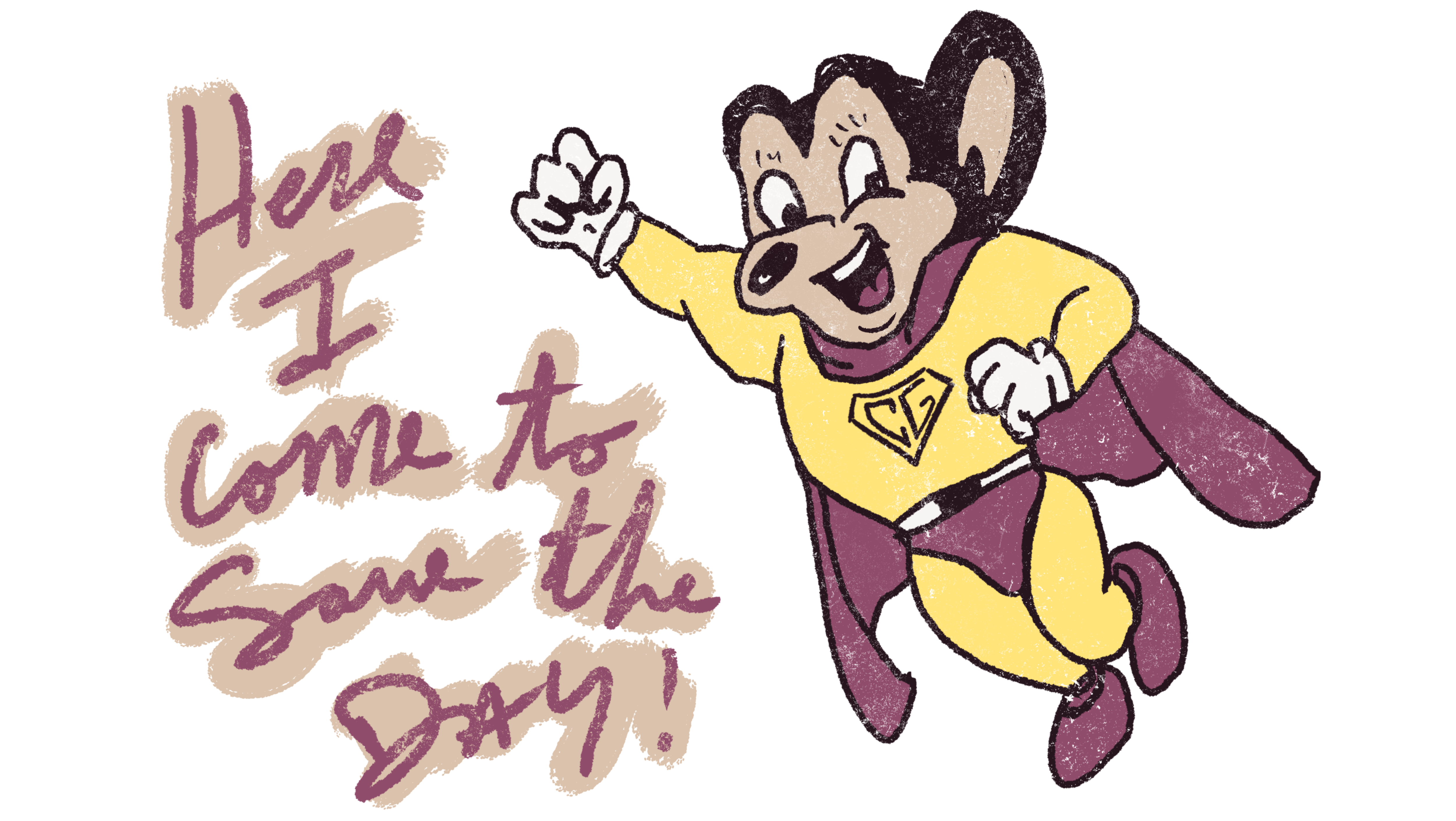
You’ve waffled, pivoted, quit, and started something different. Your audience has whiplash and you don’t know if you can pull yourself from the brink. Dwelling on what your audience might think is embarrassing at best, and a total existential dread meltdown at worst.
People will label you, put you in a box, and talk about you loudly with their internal monologue (maybe their external one too, depending on how dramatic they feel).

You will lose followers over this, but it’s going to be alright.

Unfortunately, there is no cure for creative pivotitus (an impulsive desire to drain your savings account on art supplies and craft materials to chase another project you may not finish). It’s biological. You can no more get rid of it than you can the beating heart in your chest, but there are salves for pivotitus, which all start in your head.
Embrace the shifts in creative focus as all part of the plan and integrate a culture of change into the system.
Share the harrowing tales about the superhero that you want everyone to admire.
Build that narrative into a hero arc that inspires others to become your advocate and follow your example.
Why a superhero? Because everyone knows Spider-Man, but almost nobody really knows the 437th person they followed on Instagram no matter how good their work is.
Before we dig in, two things…
Save this post. You’re going to want to spend some time thinking this one over.
Share this with someone who is [insert thing] but is [insert fear].
The Creative Generalist becomes a more powerful hero to others through your shares, and if you know someone who could really use this information, send it to them. It helps them, helps me, and it’s 100% free.
Oh, and your recommendations can earn you free stuff, just saying.
“With great power comes great responsibility.”
No, I’m not above shilling lines from popular movies to get my point across, but Uncle Ben’s advice is timely even if you didn’t get bitten by a radioactive spider.
The thing is, though, the responsibility you have is to yourself.
You’ve been told, by family, friends, and society, to pick a lane and stick with it, but you have so many lanes to choose from — which one is the right one? If I want to spend three months working on one project, but it inspires me to try a different type of project because I believe it will elevate my work, am I just supposed to ignore that intuition? That’s crazy talk for a creative.
Instead, choose to make your own lane, one that allows you to indulge all those wild impulses, and be okay with it. Your title isn’t a designer, or artist, or illustrator, or crafter, or maker of things. Your title is Creative Director of your own damn life, and nobody gets to tell you what to make or when to make it.
However, without some way to define you, those same people will put you in a box that makes them comfortable…

That’s why you need a super suit.

Why do heroes wear uniforms? So we can see them coming.
If you see a person flying above the city on webs, dangling from buildings and train trestles, wearing a red and blue suit, you know immediately that the good guy has arrived.
I’m not saying you should invest in several yards of brightly colored lycra, but you can adorn a uniform that lets others know that the multi-passionate creative has entered the room — and it starts with an umbrella. I don’t mean one to protect you from the elements, but an overarching concept that you share with others to give them a frame of reference for what it means to be someone who does more than one thing.
If you create a mythology around the things you do, one that gives the normies a point of reference to understand all of it, they can become invested in that mythology. That umbrella concept becomes something tangible their singular-focused minds can grasp. You’re giving them an identity they can get behind.
As an example, when people ask me what I do now, I tell them I’m a Creative Generalist. Not only does this give me the freedom to indulge all my impulses, but it also opens the door for me to explain it to them. They don’t know what a Creative Generalist is yet (like the people of Queens, NYC didn’t know what a Spider-Man was before he saved them from a burning building), but when I say it, they are instantly curious, because it doesn’t sound like any job they’ve ever heard before, and they can’t ignore wanting to know what it means.
When I first shared this idea on Substack, many people jumped in with alternative titles: multi-passionate, multi-hyphenate, multipotentialite — all of these work, but they are more obscure, and don’t reference the core of what I do. In that obscurity, they don’t entice others to want to know more.
When I tell others I’m a Creative Generalist, they immediately understand what creative means, and that’s all they need. That word opens the door because everybody loves and trusts creativity — it’s the emblem on the chest of the super suit.

In Case You Missed It:
They Said Pick a Lane. I Said No!

Quick poll, and tell the truth; how many different creative projects are you juggling right now?

Inspiring a societal paradigm shift
That’s word salad which I just made up to mean helping people reach an aha moment and fully grasp how it’s cool AF to indulge ALL the creative ideas.
When I tell people I’m a Creative Generalist, and explain what that means, I want to see the light bulb go on over their head. That epiphany is magic and it’s how to turn casual awareness into devotion. The more I do it, the brighter the collective light gets, outshining any limiting beliefs on the topic.
…But much money do you make from that?
It's not about the money, but how many creative ideas can I indulge — that determines success in my eyes. Yeah, money is great. I love money, but whenever I dictate my creativity around money, I'm never happy with the results. However, that idea confounds normies so much, they immediately discount us for saying it publicly. If we are not contributing to the tax base as much as them, perhaps we are useless in their eyes, but what if they better understood our values and the contribution we make to the world through our creative output?
Okay, but how?
Repetition
Examples
Connection
The more often we tell people what we believe and how we operate, the more true it becomes, both in their minds and our own. I’ve told exactly two normies that I’m a Creative Generalist. The first time I did it with a small amount of reservation. The second time was a little less reserved, but each time I got a seemingly positive response. So now I’m going to tell everyone I meet if they ask, because the proof of concept works. I will share my unwavering commitment to the identity with confidence because I want the normies to understand that this is a real thing.
Make all the things and share all the things. The more often I show the different projects I’m working on as all part of my core identity, the more likely they are to understand that it’s perfectly normal… because it IS normal to want to indulge our creative impulses. Keep showing up with examples and talking about them like it’s a foregone conclusion, and they will fall in line.
While you’re talking about your various projects, remind them that their own impulsive ideas are normal. Tell them how it’s okay to want to start a crazy project even if they have zero experience, because creative expression is one of the most joyous experiences a human can have. Why would we keep that to ourselves? If we can get through to them that creative generalism is normal for humans, they may find themselves in it.
Then they go down the multi-passionate rabbit hole like a Jack Russell Terrier on Adderall. You’ve blown their mind into a million popped synapses, imagining all the possible opportunities to make things. If the law of reciprocity is real (it is), they’ll recommend you to all of their equally-minded friends.
You give big — they give back.

The world puts you in a box the moment you show up with more than one idea. The difference between you and everyone else is that you know the box is there and you’ve refused to get in it.
That refusal is the super suit. The stories you tell, the projects you share, the pivots you own without apology — those are the webs you’re slinging between high-rises filled with corporate normies looking on with awe. Somewhere in your hero universe is another Creative Generalist who’s spent years thinking they were broken, waiting for someone to name the thing they are.
This is where you name it for them.
I needed to read this today. I feel like I'm all over the place lately and all I hear in my head is you can only do one thing well. Prioritize. "What's that ONE thing..." It's like I'm supposed to rearrange my creative pursuits around a McKinsey strategy.
I think the journey of a creative generalist is a journey that honors everything we are meant to feel, be and experience in this one crazy life. Pick a lane is so counter to how we live! Life is richer because of all the textures, flaws and hobbies, interests and loves we accumulate and shed along the way. Why should that be any different for how we work and create?
Not to mention - how much more expansive is our work and thinking when we take detours and double-dip? DaVinci, Einstein, Picasso!
The moment someone from the outside looking in at our lives tells us the right way - that's so much more about them than it is about us too.
I like this idea. I should find an equivalent to creative generalist in French (I live in France). I generally just say I work in tech or marketing, depending on who is in front of me. Easier than explaining something like « I used to be a wedding blogger and a homesteader and now I am starting a diy music career and blogging about all of it » 😅